Bone Health and Osteoporosis
- nathanmall3
- Mar 2
- 2 min read
Bone Metabolism & Supplements
Bone is living tissue that is constantly being broken down and rebuilt.
This dynamic process is called bone remodeling.
How Bone Metabolism Works
Two main cell types control the process:
Osteoblasts
Build new bone
Deposit calcium and collagen
Osteoclasts
Break down old bone
Healthy bone = balance between the two.
With aging (especially after 50):
Bone breakdown increases
Bone formation decreases
Net bone loss occurs
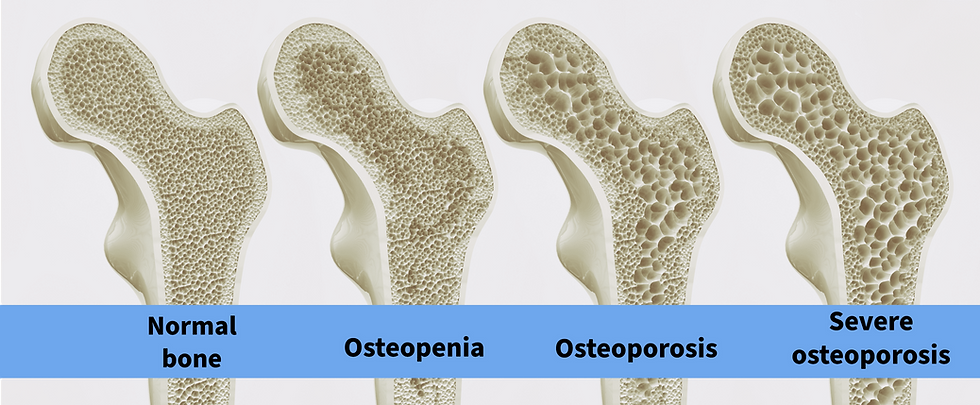
This can lead to osteopenia and eventually osteoporosis.
Key Nutrients for Bone Metabolism
1. Vitamin D
Increases calcium absorption
Regulates bone remodeling
Target blood level: ~30–50 ng/mL
Dose: 1,000–2,000 IU daily (sometimes higher if deficient)
2. Calcium
Structural component of bone
Aim for 1,000–1,200 mg/day total intake (diet + supplement)
Best from food:
Dairy
Sardines
Leafy greens
Supplement only if dietary intake is low.
3. Vitamin K2 (MK-7)
Directs calcium into bone
Activates osteocalcin
Dose: 90–180 mcg dailyEspecially helpful when taking vitamin D.
4. Magnesium
Needed for vitamin D activation
Supports bone mineralization
Dose: 200–400 mg dailyForms: glycinate or citrate preferred
5. Collagen Peptides
Provide structural protein matrix for bone
May improve bone density modestly
Dose: 5–10 grams daily
6. Boron (Often Overlooked)
Helps regulate calcium & magnesium
May support hormone balance
Dose: 1–3 mg daily
Non-Supplement Bone Health
Supplements are secondary to:
✔️ Resistance training
✔️ Weight-bearing exercise (walking, stairs)
✔️ Adequate protein intake (1.0–1.2 g/kg in older adults)
✔️ Hormonal balance (testosterone/estrogen)
Mechanical loading is one of the strongest stimulators of osteoblast activity.
Sample “Bone Support Stack”
Foundational:
Vitamin D3
Magnesium
Dietary calcium (supplement only if needed)
Enhanced:
Vitamin K2
Collagen peptides
Boron
Reassess bone density (DEXA) every 1–2 years if clinically indicated.
Important Notes
Excess calcium without K2 may increase vascular calcification risk.
Kidney disease changes mineral recommendations.
Severe osteoporosis may require prescription therapy (bisphosphonates, etc.).



Comments